Showing posts with label Myanmar. Show all posts

Thursday, May 21, 2015

Hsipaw: a bit of Shan country


Our Nat-spirit protected taxi, delivered us safely to Hsipaw. We arrived at Tai House resort, a brand new hotel built to accommodate the backpacker  boom in Hsipaw, fueled by the city's reputation as a jumping off point for treks into the Shan hills. A more adventurous traveler might venture to Lashio, further north in Shan country, closer to the skirmishes between Myanmar and a small group of separatist rebels. I celebrated my 27th birthday in Hsipaw. Myanmar cuisine offers many sweets, but chocolate cake isn't exactly a popular local dish. With the help of the guidebook, we found a decent brownie, and I celebrate the beginning of my 27 years with roast duck, cake, ice-cream and Mandalay rum.

In the fields outside of Hsipaw 
The Shan state and other outer border states that are home to Myanmar's other ethnic groups who had their own princes and governments similar to the maharajas in colonial India.  After World War II, Burma gained independence. In 1948, many of these states and rulers signed the initial constitution which was supposed to protect their autonomy and the eventual  right to secede in 10 years. With the military coup in 1962, the army quashed all notions of autonomous states and attempted to bring the country under their iron fisted control.

Entrance to an educational
 monastery 
The last Saopha of Hsipaw, Sao Kya Sen, was a progressive ruler, who after surviving the Japanese occupation of northern Burma, attended the University of Colorado and while the the US met and married an Austrian woman who became his princess. Together they tried to modernize agricultural practices and improve education.  In 1962, in the first few days of the military coup, the Saopha was kidnapped and eventually executed by the army for refusing to cooperate with the Tatmadaw demands to aid them in destroying  the Shan rebel army. The military government has never admitted to his disappearance and death.

Rice noodles drying outside
 a local factory
Hsipaw is a major agricultural center, surrounded by farming villages and cash crops such as rice, soy beans, and corn. Sam and I took a 5 hour guided trek with a local guide. He led us through Hsipaw showing us the local rice mill, noode factory and then into the villages. In addition to Shan villages, outskirts of Hsipaw was well populated with monasteries. Our guide  (after jokingly asking me if I was a spy) admitted to being part of the 88 Generation. This is the group of university students who on August 8, 1988, protested against the oppressive military rule. The protests were ruthlessly quashed, thousands were killed by the army and the bodies were collected in truck beds and delivered to crematoriums. The 88 generation annointed Aung San Su Skyi their leader. After years of personal sacrifice, harassment by the military government and her long house arrest she remains the official leader of the National League for Democracy (NLD).

Nat shrine at the village entrance 

At the Nat animal workshop 
All that introduction to say our guide was fairly open about the history of Myanmar though subtle in his criticisms. He said because the education within  government provided  schools is poor AND they are not free, educational monasteries fill the gap, at least for primary education. Monasteries take on novices and nuns. These are young children, about 5 to 12 whose parents send them to the monastery to live for a few years to receive primary education and learn the tenets of Buddhism. The monasteries are supported by donations from the villagers in the form of money and food. Hsipaw was full of little boys running around in the red monk robes. Many of the monasteries we walked through had 50-70 novices. Despite the dominance of Buddhism, Animism remains active in Shan villages  through worship of Nat spirits. Each village has a Nat shrine "before the Buddha" at the entrance of the village. Some are raised platforms, decked with red and white flags with offerings of flowers, water, and fruit. Some of the shrines contain large wooden animals representing major animal spirits meant to protect the whole village. It seems Nat worship complements Buddhism, since inside each house a Buddha shrine also receives daily offerings and prayers.
Nat shrine along the path,  a Nat spirit
resides in the "empty " space 


Rainy walk to the teak monastery 

The crumbling pagodas of Little Bagan 
Sam navigating us through the
 back roads Hsipaw 
The rains began in earnest during our stay at Hsipaw. Our 5 hour hike was the last clear day in that it only rained once during the day and again at night. Rain poured all night long and into each morning. We had wanted to take a 10 hour hike to the Paluang  villages where tea is grown. However, we were dissuaded by the rain and muddy, slippery tracks. Each day, despite persistent showers, armed with waterproofs and umbrellas, we took short walks around Hsipaw to see the crumbling pagodas of "Little Bagan" and more villages and monasteries. We spent a lot of time reading on our porch or attempting to use the very slow wifi. I often had to remind my impatient American self that not only is open access to the internet fairly new to Myanmar, wireless internet and 3G are very new. Just one year ago, a SIM card cost $200 dollars, now they are $2 at every street corner. (Local lore courtesy of Samuel Pursch)

Trash along the creek bed
It must be said, Myanmar is a bit rough around the edges. There doesn't seem to be official trash collection or disposal outside of Yangon. The banks of picturesque country streams are covered with the detritus of village living.  Along the railroad tracks, litter lines the path. Even Yangon doesn't have regularly stationed trashcans. On my first day in Yangon, I couldn't figure out where to throw the bits of plastic that sealed the tops of purified water bottles. The crinkly plastic accumulated in my pockets until Sam suggested I throw it on the ground like the Myanmar do. In place of trash cans, the city employs a legion of street sweepers. Still, the city and the countryside are dirty and littered, and I don't want to see the stew it becomes when the real monsoon rains arrive.
Common sight of a motorcyclist
 holding a umbrella while driving
Now I'm on the 15 hour bus back to Yangon. We are slowly retracing our path back to Pyin Oo Lwin to Mandalay and then back to Yangon.  We are inching along the hairpin turns and switchbacks etched into the hills that flank the Goteik gorge. Motorcycles occasionally pass us, there is a line of equally large coach buses and trucks crawling along behind us. I can feel gears grind to brake on the steeper decline and pull us back up the steep ascent. In the morning we'll reach Yangon, but not until we've taken a few rest stops. The driving here is hard, and even in my impatience to get home, I can appreciate the need cool down the engine and restock on Betel nut and tea.

Village path along the river


Shan Hills around Hsipaw 

Shan hills,  more pagodas


Wednesday, May 13, 2015

Temples of Bagan


Bagan is perhaps Myanmar's most mystical,  stunning and photographed site. In a true ditz move, I left my camera battery charging in Yangon, so all I have to offer are a few android cellphone pictures.


This ancient city was established when a great Bamar king converted from Hinduism to Buddism. Over several miles of plains, some 4000 temples dot the landscape. The construction  took place over a 230 year period ending in 1287. The majority of signed temples indicate building years of 1150 to 1200. The structures are monuments to the power of Buddhism in this area with an emphasis on mediation but also to the older belief that building a temple for the Buddha might help atone for sins committed in this life and prevent a powerful person from being reincarnated as something undesirable like a woman. (Reincarnation as a woman is lower than many other animals)


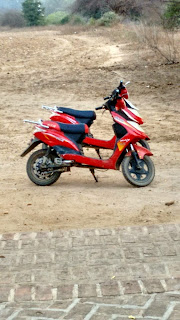
Devotion to Buddha and fear of reincarnation made Bagan a majestic panorama of mostly red brick temples with accents of occasional white temples and golden pagodas. One can drive for 20 minutes along the main road and there are temples as far as the eye can see. The touristic part is split into Old and New Bagan. Old Bagan is an area of hotels and businesses nestled within the highest concentration of impressive temples, near the original ancient Bagan City center. In 1990 the Myanmar government ordered a relocation of all people living within the old city limits and through imminent domain (aka the military junta government says do it) relocated them to some former peanut fields a few miles away.  We stayed in new Bagan at the lovely Arthawka Hotel. Like most tourists, we saw Bagan riding around on electric bikes. The e-bikes were more like scooters,  and made me feel like I was touring this ancient city either on very fast motorized wheel chair or a very slow podracer from Star Wars Episode One: Phantom Menace.  So while feeling like a very lucky medicare recipient vs. a star wars character,  I whirred along the red dirt paths from temple to temple.
Buddha in a small shrine

Our e-bikes


Each temple, from those the size of a doll's house to grander mansion sized temples  have at least one Buddha statue within the sanctuary.  Many of the midsized temples have a tiny staircase to un upper level mediation area that also opens onto the roof of the temple.  From the roof of any of these temples, we had a splendid view of the whole plain. On our first evening in Bagan, we set out on our e-bikes to watch the sunset. We met a young artist from Bagan who showed us which temples we could climb on and pointed out the major temples on the plains.


We spent one and a half days in Bagan and could have used one more to properly see all of the major temples. It the hottest time of the year to visit Bagan. As these temples are Buddhist holy sites and many are actively worshipped, we have to remove our shoes to enter even the courtyard of the temple. By 10am the blazing sun heats the stones to a scorching temperature and it is painful to walk on any unshaded part. We woke up at 4:30am and were on our e-bikes by 5am, speeding down the main road from new to old Bagan. We made a disorganized tour of the major temples, with a few instances of driving our tiny machines through thick sand trying to get from one track to another. A few of the temples have decently preserved frescoes of the Buddha's life and teachings.  The whole setting of holy places in such a desolate place reminded me of the cave churches in Kappadokya.  The battery of Sam's e-bike started to drain quickly around 8am, so we started our journey back to the hotel.


We went went out again in the evening to catch sunset from a temple rooftop,  but a threatened rainstorm chased us and our dinky e-bikes back to New Bagan. Instead we watched the sun set along the Ayeyarwady River and had a delicious meal of mutton curry, coconut rice, lentils,  and eggplant.
Sunset over the Ayeyarwady River

Standing Buddha inside Ananda Pahto

Hallway of Ananda Pahto


Saturday, May 9, 2015

Shwedagon Pagoda

Shwedagon at dawn
My second morning in Yangon, I took advantage of my jet lag to wake up at 4:30am to visit Shwedagon Pagoda at dawn. Myanmar is not called Land of the golden pagodas for nothing.  Even at Ngwe Saung, a fairly secluded beach town there were 3 miniature gilded pagodas within a short walk from our beach bungalow.


Shwedagon is known as the crown of Burma and stands at 325 feet, adorned with 27 metric tons of gold. Whether gleaming in the bright sun during the day or illuminated with industrial lights at night, Shwedagon is a glowing tower that can be seen from all over Yangon. This pagoda is an important buddhist monument as it is said to hold 8 hairs of Gautama Buddha that he gave to 2 Burmese merchants who offered him honey cakes as alms. The term "pagoda" is misleading in terms of Shwedagon; in fact it is religious compound made up of gilded Buddhas and shrines to house the Buddhas.


At 5am, my taxi dropped me at the East gate (not the renowned Southern gate guarded by a pair of giant Chinthe.) This entrance appeared to be a regular market street. However vendors were already  pushing pagoda-specific wares of plastic bags for shoes and wreaths of jasmine and other flowers as offerings for the Buddha. I followed 3 monks toward an impressive staircase and removed my shoes when they did so. We ascended three flights of stairs,  finally emerging onto the main terrace where I was greeted by the towering pagoda.  I expected the place to be empty before dawn, but it already vibrating with activities of worship. The larger Buddha statues have their own shrines that look like open air temples.  Many of theses structures were full of monks and other supplicants chanting and ceremonially cleaning and draping the Buddha in yellow robes.
The scent of incense gently scented the compound as each Buddha shrine was adorned with candles, incense, food offerings and flowers. Shwedagon pagoda with its hundreds of mini-shrines to buddha, each with its own group of adorers, struck me as what catholics would do for saints if worshipping saints didn't already verge on idolatry. Saints and the many different of buddhas represent the idea that our prayers and desires are best taken to God's ear by an advocate who knows and understands our pleas.  I suppose I felt at home because of my Catholic background, and my mother's devotion to certain saints to help her family.
Pre-dawn prayers


At 6am Shwedagon was positively frenetic with worshipers and visitors, like myself, who seemed content to make the counterclockwise lap around Shwedagon over and over. I never tired of gazing up at the gleaming tower, or admiring the other gilded buildings that contained Buddhas in a variety of positions and made from different mediums. I wandered into one shrine, covered  in a mosaic of mirrors, with several Buddhas sitting in a forest under trees. The pewter colored buddhas were being rubbed down with Brasso.

Buddhas being polished with brasso


The most impressive site was a ceremonial march of many monks and others around the pagoda ending in one of the larger shrines tuckes away in a corner. Three monks led the procession chanting and holding incense, their chant was echoed by the followers, then punctuated by a sharp horn, a chime, and the bang of a gong. The planetary shrines, 8 in total, represent the days of the week with Wednesday having one for morning and evening.  For luck, people pray and make offerings to the shrine of the day of their birth. These seemed to be the most active miniature shrines with different groups, mostly women, taking turns to wash the Buddha with small cups of water and lay wreaths of flowers.

After sunrise 
Shwedagon was a welcome glimpse and introduction to Buddhism in this majority Buddhist nation. For better or worse,  religion permeates daily life in Myanmar. Monks and nuns roam the streets with the rest of us. I was delighted to see monks on the beach at Ngwe Saung; indicative that the monks live among the people they ask for alms. I know some monks in Myanmar incite violence against the muslim minority group the Rohingya and Buddhism has been used as a tool of nationalism by the military government.  The locals know monks are not free from corruption or venal desires. Despite their vow to a simple life, daily asking of alms, and allowed only 6 possessions, many monks happily play on their iPhone 6.


I liked the manifestation of Buddhism I saw at Shwedagon pagoda; it was solemn but joyful, vocal,  and transparent in its practice.  The buddhas are plied with offerings because the worshipers are asking for something in return. When the pagoda is re-gilded, people make donations to cover the cost of gold leaf.  There is a very clear understanding: you must give in order to receive.  Shwedagon was opulent, and it begs the question of the amount of charitable services could be bought with that type of money. Yet, I appreciated that the gold and beauty of Shwedagon was open to all worshipers  (Well, $8 for tourists.) and the compound felt like a community center, not a silent cathedral.  My next tangle with Buddhism will be at Bagan, an ancient city filled with Buddhist temples, pagodas, and a glimpse into Myanmar's past.


Thursday, May 7, 2015

Yes, this is paradise: Ngwe Saung

At the beach!
In my opinion,  no extended warm weather vacation is complete without a stay on the beach. I can't say if this belief is due to my Cuban heritage or my father's insistence that relaxation can only happen in view of  lapping waves. Yes, I've lived on an island, in a beach town, for 4 years. Yes, I've enjoyed my own Gulf of Mexico beach and reveling in the laid-back island culture. I still needed to visit a beach while in Myanmar.   My own Galveston beach, even without the seaweed invasion, can't compete with any foreign beaches.  As the Cuban saying goes, my wine is vinegar,  but it is my wine (Mi vino es agrio, pero es mi vino). I'm happy to report that I may have found a small strip of paradise here in Myanmar. What a pity it takes over 24 hour to travel here from the US....
In Yangon: Sam buying our bus tickets to Ngwe Saung
Sam knows my intense love of the beach, so he arranged for 5 days in Ngwe Saung in the Ayeyarwady region on the southwestern coast of Myanmar.  Apparently Ngwe Saung and Chau Tang are popular beach towns for weekend trips from Yangon.

Both  beach towns are dotted with upscale resorts, however we are staying at the southern tip of Ngwe Saung beach, the more remote part of this 13 mile beach. Our beach adventure began with a 9pm bus from Yangon. Buses are the primary mode of long distance travel in Myanmar; one round trip ticket from Yangon to Ngwe Saung cost  $25. Our Golden Star bus was of slightly higher quality than an American greyhound bus with excellent air conditioning and room to recline the seats. When we boarded,  there was a persistent beeping noise that I assumed was due to the bus door being open and would stop when we started driving.  The beeping, in triplet rhythm, continued the entire bus ride, though it was drowned out the first few hours by Myanmar pop music played over the intercom. The  bus trip took 7 hours, mostly along narrow country  roads with pit stops every 2 hours for the bus driver to smoke a cigarette and for bathroom breaks as the bus had no toilet.  The last 30 mile leg, from Panthein to Ngwe Saung,  was a 2 hour crawl along twisting roads.


View of Shwe Hin Tha Resort Hotel
Four days into our stay, I am happy with our accommodation, Shwe Hin Tha Resort Hotel. I'll admit I was skeptical when we arrived at 4:30 am to a very basic bamboo hut with a rusty fan.
Said rusty fan
Resort is an overstatement; it is more a collection of bamboo and concrete beach bungalows, and a decent hotel restaurant and deck. Everywhere at hotel offers a panorama of the gorgeous beach. The power is off during the day time, so all the guests spend their time on the beach or on their porches admiring the beach.  A lone 1990s fan runs at night to circulate the ocean breeze and makes it manageable to sleep under the mosquito net.

Thanks to a recommendation from one of Sam's friends, we have eaten last two nights at the neighboring beach front restaurant,  Jasmine. Both nights we were served at perfectly grilled whole fish with a crunchy salt and garlic crust, tender and flaky white meat complemented by a subtle chili oil sauce that we washed down with Myanmar beer.


I have spent most of my days either reading on the beach,  relaxing on our porch, or swimming in the warm turquoise water.  This beach doesn't have a sunbathing culture, evidenced by the the most uncomfortable hard blue wooden lounge chairs under our beachfront hotel palapas.  Most of the Myanmar swim in their longyi or the women stay mostly clothed long shorts and shirts; the only people in bathing suits are the other westerners at our hotel.  It's hard to tell if this is cultural modesty or if the Myanmar want to protect themselves from the sun.  Mostly there are people walking along the beach or sitting on their own bungalow porch admiring the view.

Ngwe Saung Yacht Club Marina
I had to have a few hours of comfortable sunbathing on a cushioned lounge chair, so I took a field trip to Ngwe Saung Yacht Club Marina, an actual resort 10 minutes away by motorcycle. In 2012, Myanmar hosted the 2012 ASEA games and Ngwe Saung was the watersport hub. I love the indulgence of swimming in a cool, blue pool while admiring a pristine beach.


Yesterday,  we rented a motorcycle and rode along the shoreline at low-tide. For most of the trip we were the only people on the beach. Motorcycle and the ubiquitous motorcycle taxi is the main form of transport to access the remote parts of the beach that is sparsely populated with fishing villages. On our hour long ride, we occasionally passed other motorcycles, but no other tourists.
Remote Ngwe Saung beach


Ferry Crossing
We crossed a small eddy using a simple hand pulled ferry hand; we paid the man 300 kyatts (30 cents). I felt immense joy and gratitude, as we experienced such a stunning, isolated scene.


A lone beer station for the fishing villages